


 office@agrovio-alp.at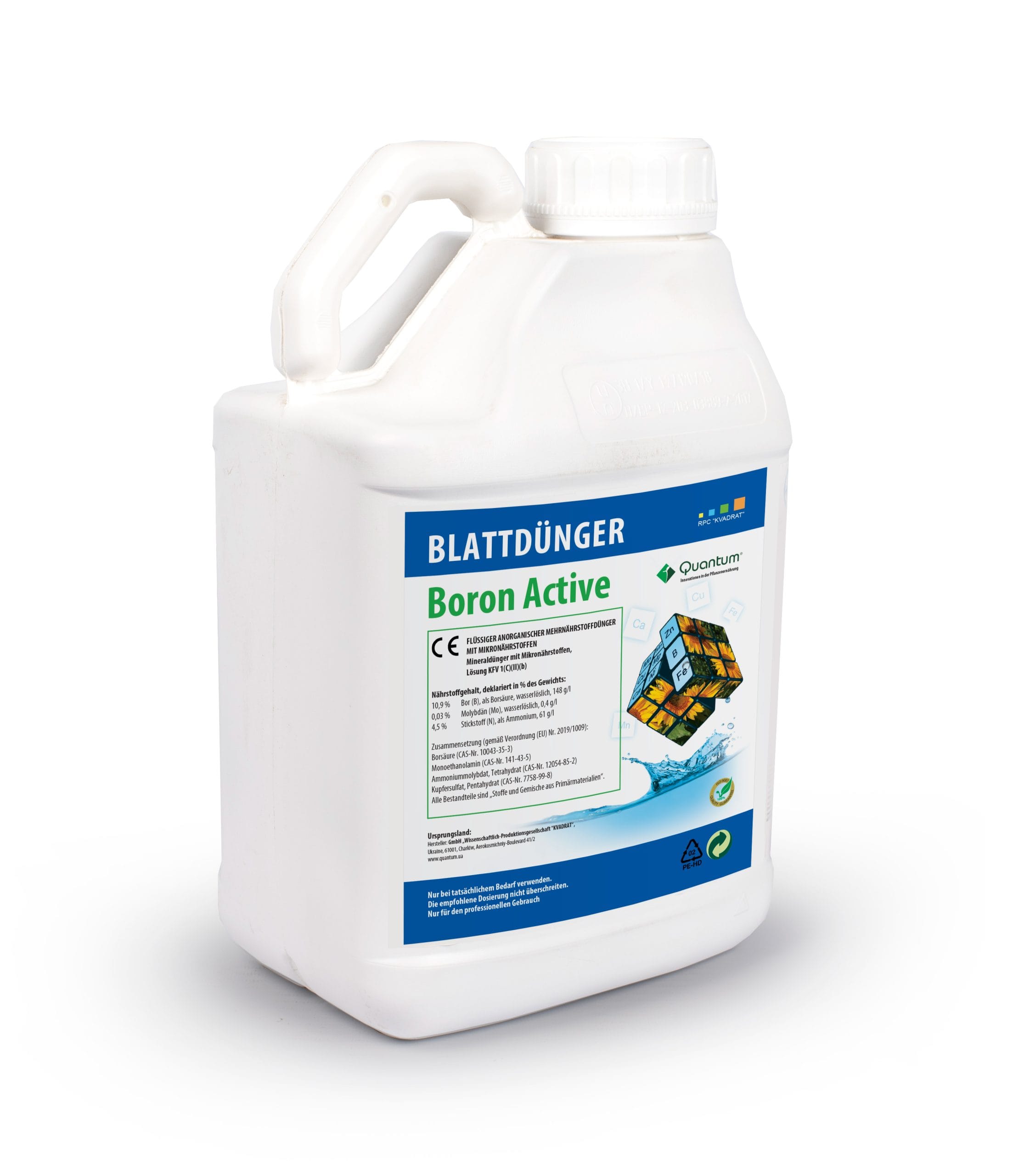
CODE: 278
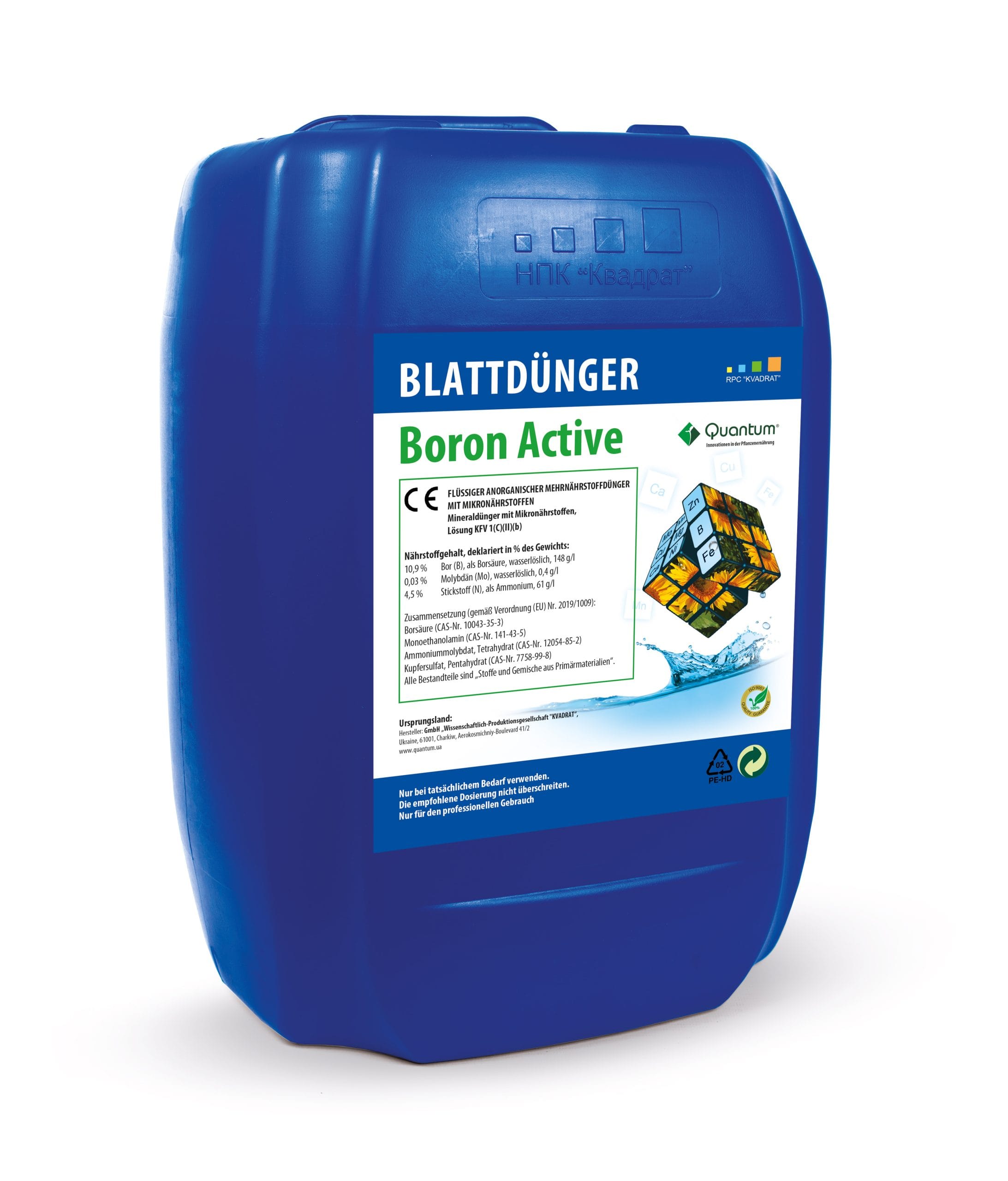
Quantum Bor Active
Request a callProduct information
A highly effective product for the prevention of boron deficiency and supplying plants with boron.
When applied, the product:
-
promotes the development of a strong functional phloem–vascular system in plants;
-
increases the number of flowers and improves pollination;
-
enhances the flowering process;
-
intensifies the accumulation and transport of sugars;
-
reduces empty grain and seed sterility;
-
strengthens plant immunity;
-
significantly increases resistance to root and fruit rots.
In conditions of boron deficiency, especially when confirmed by visual or laboratory diagnostics, for all crops (particularly fruit, berry, and vegetable), repeated treatments at 7–10 day intervals are recommended. For best results, foliar feeding should be carried out in combination with other products according to technological schemes for the specific crop. See the recommended Quantum® fertilizer application schemes.
Spraying
During foliar feeding, working solution consumption:
-
vegetable crops – 200–400 l/ha;
-
grapes and fruit crops – 500–1000 l/ha.
Treatments are performed with standard sprayers. The working solution should be prepared immediately before use: fill the tank 2/3 with water, then add components sequentially, mixing thoroughly after each addition.
Spraying should be done in the morning or evening. Optimal air temperature: 10–25 °C, wind speed up to 5 m/s.
Precautions: Avoid treatments under low or high air temperatures, intense sunlight, or strong winds.
Compatibility with other agrochemicals
Quantum® Bor Active can be applied together with plant protection products and other fertilizers. Before mixing, check compatibility: a prepared working solution should not form sediment. Slight turbidity is acceptable.
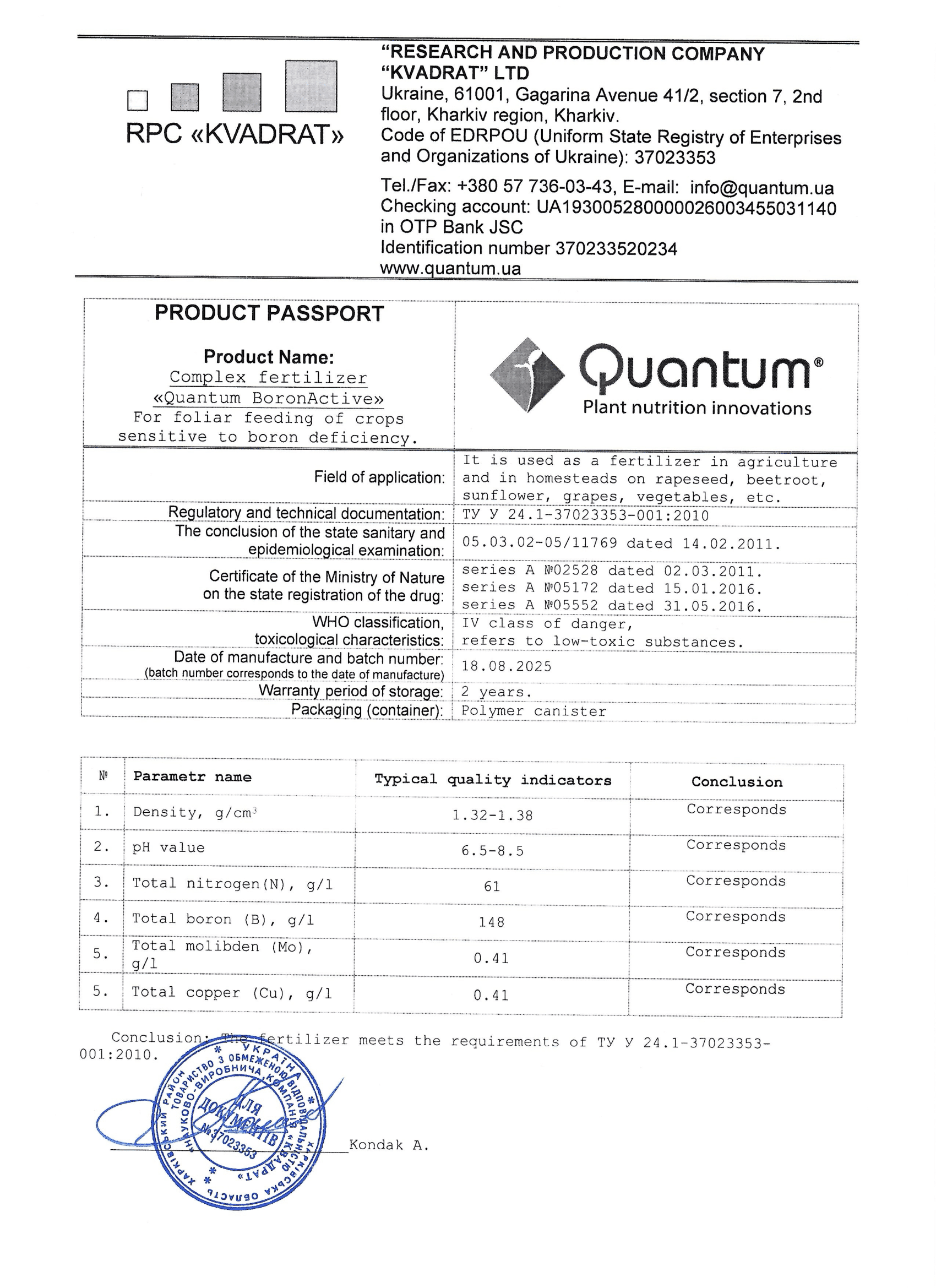
B
14.0%, 140 g/l
N
5.5%, 55 g/l
Cu
0.005%, 0.05 g/l
Mo
0.02%, 0.2 g/l
Aminosäuren
1.5%, 15 g/l
Wert
6.5–8.5
Dichte
1.30–1.36 kg/l
Recommended Application Rates of QUANTUM® Quantum Bor Active for Foliar Feeding
Rapeseed
Autumn application at the 4-leaf growth stage – 1–2 l/ha
Spring application at the beginning of stem elongation – 2 l/ha
Pre-flowering application – 1 l/ha (can be combined with insecticide treatment against pollen beetle)
Water rate: 150–350 l/ha
Sugar Beet
At the 4–6 leaf stage of the crop; in case of severe deficiency, repeat after 14 days at a rate of 1 l/ha
Application rate: 2 l/ha
Water rate: 150–350 l/ha
Sunflower
At the 2–3 true leaf stage up to the bud stage; in case of severe deficiency, repeat every 10–14 days
Application rate: 1.5–2.5 l/ha
Water rate: 150–350 l/ha
Poppy
At the 6–8 leaf stage of the crop
Application rate: 1 l/ha
Water rate: 150–350 l/ha
Cereals
From the end of tillering until the appearance of the flag leaf
Application rate: 0.1–0.3 l/ha
Water rate: 150–350 l/ha
Potatoes
One week after row closure
Application rate: 1 l/ha
Water rate: 150–350 l/ha
Lettuce, Brassica Vegetables
At the 4–6 leaf stage of the crop; if severe deficiency is detected, repeat after 10–15 days
Application rate: 3 l/ha
Water rate: 150–350 l/ha
Strawberries
Two applications:
• First at the white bud stage
• Second 14 days later
Application rate: 1 l/ha
Water rate: 350–500 l/ha
Apple Trees, Fruit Trees
1st application – at the pink bud stage until the beginning of flowering
2nd application – after petal fall (1–2 l/ha)
3rd application – after harvest and before leaf fall (2 l/ha)
Water rate: 500–1,000 l/ha
Sweet Cherries
1st application – at the pink bud stage (1 l/ha)
2nd application – 14 days later (optional depending on condition)
Water rate: 500–1,000 l/ha